
Online Catalogue
11 March 2026 - Basel Watch Auction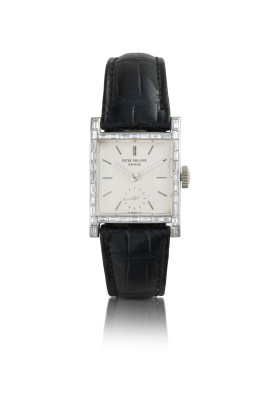
acquired by the current owner from the thematic auction The Art of Patek Philippe celebrating the 150th anniversary of Patek Philippe in 1989 (The Art of Patek Philippe, Habsburg Feldman, April 9, 1989)
Historical Significance:
Patek Philippe’s use of platinum for simple time-only pieces demonstrates the manufacture’s commitment to material excellence regardless of complication complexity. These watches elevate the fundamental act of timekeeping to an art form through material choice alone.
Technical Considerations:
Platinum’s density (21,45 g/cm³) creates a substantial wrist presence that distinguishes these pieces immediately. The metal’s working properties require specialized techniques – it’s harder to machine than gold, demands different polishing methods, and requires expert case-making skills that few manufacturers possess.
Collector Perspective:
Time-only platinum Patek Philippe watches occupy a unique position in collecting. References such as the Calatrava in platinum, particularly vintage examples, demonstrate how material choice can transform a simple three-hand watch into an object of extraordinary desirability.
Rarity Factor:
Production numbers for platinum time-only pieces remain deliberately limited. The metal’s cost, combined with specialized manufacturing requirements, naturally restricts quantities. This scarcity, paired with platinum’s prestige, creates exceptional long-term value retention. Aesthetic Impact: Platinum’s natural white color and subtle luster provide a different visual character than white gold. The metal ages gracefully, developing a patina that enhances rather than diminishes its appeal over decades. These timepieces exemplify how the finest manufactures can elevate fundamental horological functions through exceptional material choices and craftsmanship.
Patek Philippe
Ref. 2496, No. 749058/516612
Sold on October 5th, 1959
A platinum manual winding and diamond
wristwatch
Case: rectangular, snap-on case back,
signed
Dial: sigma dial, silvered with applied
baton numerals and subsidiary seconds,
signed
Movement: manual winding, decoration
Côtes de Genève, stamped with Geneva
hallmark, 18 jewels, adjusted
5 positions, signed
Buckle/Clasp: 18k white gold buckle,
signed
Dimensions: 26 × 26 mm
Weight: 42,6 g
Accessories: a certificate for lot 28
from the Patek Philippe 150th Anniversary
thematic auction, The Art of Patek
Philippe, organized by Habsburg Feldman
& Antiquorum, April 9th, 1989, signed by
Osvaldo Patrizzi
CHF 40'000 – 80'000
acquired by the current owner from the thematic auction The Art of Patek Philippe celebrating the 150th anniversary of Patek Philippe in 1989 (The Art of Patek Philippe, Habsburg Feldman, April 9, 1989)
Historical Significance:
Patek Philippe’s use of platinum for simple time-only pieces demonstrates the manufacture’s commitment to material excellence regardless of complication complexity. These watches elevate the fundamental act of timekeeping to an art form through material choice alone.
Technical Considerations:
Platinum’s density (21,45 g/cm³) creates a substantial wrist presence that distinguishes these pieces immediately. The metal’s working properties require specialized techniques – it’s harder to machine than gold, demands different polishing methods, and requires expert case-making skills that few manufacturers possess.
Collector Perspective:
Time-only platinum Patek Philippe watches occupy a unique position in collecting. References such as the Calatrava in platinum, particularly vintage examples, demonstrate how material choice can transform a simple three-hand watch into an object of extraordinary desirability.
Rarity Factor:
Production numbers for platinum time-only pieces remain deliberately limited. The metal’s cost, combined with specialized manufacturing requirements, naturally restricts quantities. This scarcity, paired with platinum’s prestige, creates exceptional long-term value retention. Aesthetic Impact: Platinum’s natural white color and subtle luster provide a different visual character than white gold. The metal ages gracefully, developing a patina that enhances rather than diminishes its appeal over decades. These timepieces exemplify how the finest manufactures can elevate fundamental horological functions through exceptional material choices and craftsmanship.