
Online Catalogue
11 March 2026 - International Art before 1900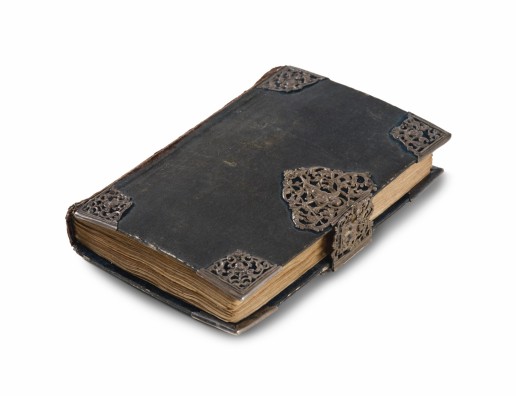
Belgium, Bruges, ca. 1440–1450 and ca. 1480–1500 (?). Book of Hours (Use of Rome). In Latin and French, illuminated manuscript on parchment. 19 × 13,5 cm (dimensions of leaves); 20,5 × 14,5 cm (dimensions of binding). With six large miniatures (one added miniature (Burgundian artist?); five arch-topped miniatures attributable to the Masters of Gold Scrolls group of illuminators). Interesting Book of Hours with five miniatures attributed to a member of the Bruges workshop named “Master of the Gold Scrolls”, having belonged to Jean de Damas, a member of an important Burgundian family, chamberlain of Duke Philip the Good. [VI ff.] + 124 ff., missing a number of leaves and a number of miniatures (see text below) [collation impracticable, quires reconstituted with leaves bound in disorder], written in a gothic bookhand, in brown ink, by a main hand (justification: 90 × 65 mm) [other later hands: ff. IV–V verso; ff. VI–VI verso; ff. 72–72v; f. 117v; ff. 118–118v; ff. 119v–123v, f. 124], rubrics in red, calendar KL initials in burnished gold on blue and dark pink grounds with a descending baguette of burnished gold, numerous small initials in gold or in blue with opposing filigree ornamentation in dark blue or in red, larger initials in burnished gold on pink and blue grounds with white tracery, large ornamental initials opening the main liturgical texts, in pink and/or blue with white tracery on gold grounds, infill of colored swirling acanthus leaves (5-line high), five large miniatures set in full illuminated borders of burnished vine leaves, colored acanthus leaves and floral motifs, one large added miniature. Bound in black velvet (very worn), smooth spine, metal cornerpieces, fixture and clasp, the former with the figure of John the Baptist holding a staff and the latter with the Agnus Dei (binding 19th century).
Provenance: 1. The manuscript was copied for the universal liturgical use of Rome as per the Hours of the Virgin and the Office of the Dead. This Book of Hours was made in Bruges towards the middle of the fifteenth century. A place of origin in Bruges is suggested by the style of the ornamentation and miniatures (to the exclusion of the added miniature on fol. VI). The saints in the Calendar and Litany rather point to use in Northern France and/or England, suggesting the manuscript was made in Bruges for export abroad. See on these Bruges manuscripts destined for export: N. J. Rogers, Books of Hours Produced in the Low Countries for the English Market in the Fifteenth Century, 2 vols. (unpublished M. Litt. Dissertation, University of Cambridge, 1982); N. J. Rogers, «Patrons and Purchasers: Evidence for the Original Owners of Books of Hours Produced in the Low Countries for the English Market», Als ich can. Liber Amicorum in Memory of Professor Maurits Smeyers, éd. B. Cardon, J. van der Stock et D. Vanwijnsberghe, Louvain, 2002, 2 vol., vol. II, p. 1165–1181; A. Bergeron-Foote, «Entre Flandre, Angleterre et Italie, un livre d’Heures résolument européen dans les Collections spéciales de la Bibliothèque des Arts de l’UQAM», Memini, 15 (2011), pp. 23–38. 2. Owned by Jean of Damas (circa 1423–1481), seigneur of Digoine, Clessy and Saint-Amour, «conseiller et chambellan» of Philip the Good, Duke of Burgundy, governor of Mâconnais in 1446. He was made Knight of the Order of the Golden Fleece in 1468. Jean of Damas had married Anne de Digoine de Thianges, another important noble family from Burgundy. Chrétien de Digoine de Thianges, «chambellan» of Charles the Bold was a faithful servant of Mary of Burgundy. The Damas family was one of the oldest families in France, recorded since the ninth century. The family played an important role on the military, religious and diplomatic fronts. There is the following inscription on fol. 118v: «I. Damas», in a late fifteenth-century hand. The name is associated with a number of «fermesses». On that same leaf one finds traces of pilgrims’ badges. In addition, one finds on fol. VI in the upper portion of the leaf, a red wax seal (datable to the 17th century) with the arms of the Damas family: D’or à la croix ancrée de gueules. 3. European Continental Collection. ff. I–IIIv, Prayer in French, copied in a late sixteenth or early seventeenth-century hand, beginning: “Equyte de la mor seconde quy nous a estée demantée par nos abominables pechés…” (fol. I); “Benois clous dont il fust cloué …” (fol. II). ff. IV–Vv, Excerpts from suffrages including: Holy Cross; Symphorianus; Thomas; Sebastian; Theobaldus; Denis; Eutrope; Ursin; Mary Magdalene; Catherine; Pro pace. f. VI, Prayer against pagans and heretics: “Ad auxilium postulandum contra paganos et hereticos oracia …”; followed by a Gospel excerpt relative to the Passion according to John. ff. 1–6v, Calendar, in Latin, graded in red and brown inks, with red-stroked capitals, for the use of a diocese in Northern France, with the following noteworthy saints: Augustinus (27 Feb.); Adrian (4 March); George “pope” [mistake for Pope Gregory I] (12 March); George “pope” [again for Pope Gregory] (15 April); George, martyr (23 April, in red); Dunstan, bishop of Canterbury (19 May); Bonifatius (5 June); Mary Magdalena (23 July, in red); Christine (24 July); Samson (28 July); Oswald of Northumbria (5 Aug.); Donatus of Arezzo (7 Aug.); Bartholomew (in red, 25 Aug.); Egidius (1 Sept.); Bertin, abbot (5 Sept.); Remigius (1 Oct.); Francis (4 Oct.); Leonard of Noblat (6 Nov.); Brice (13 Nov.); Martin (in red, 19 Nov. rather than 14 Nov.); Edmund (22 Nov.); Eligius (1 Dec., in red); Nicasius (14 Dec., in red); Lazarus (17 Dec.); Thomas Becket of Canterbury, martyr (29 Dec., in red). ff. 7–71v, Hours of the Virgin, use of Rome [incomplete and bound in disorder, interspersed with texts that traditionally are autonomous], with vespers (ff. 7–10v); excerpts from the Hours of the Cross (ff. 11–13); Mass of the Holy Virgin (ff. 13v–16v); Gospel extracts (ff. 16v–24v); Prayers and psalms of the days of the week (ff. 25–41v); excerpts from the Hours of the Virgin, lauds, prime and terce (ff. 42–57) [wanting many leaves and bound in disorder]; sext (ff. 56v–58v); none (ff. 59–59v) [wanting the beginning]; antiphona super Nunc Dimittis “Sub tuum presidium” (fol. 64v); followed by prayers. The Hours of the Virgin are missing at least six miniatures (for matins, lauds, prime, terce, none, compline), with only the miniatures for sext and vespers present, bound in disorder. ff. 72–72v, Prayer (added by a later 16th-century hand), Obsecro te. ff. 73–88v, Penitential Psalms and Litany (ff. 84v–86v), followed by prayers. Noteworthy in the Litany: Vincent, Victor, George, Hippolyte, Augustine, Martin, Eligius, Egidius, Nicholas, Leonard, Mary Magdalena. ff. 89–117, Office of the Dead (use of Rome), with the following readings: (1) Credo quod; (2) Qui Lazarum; (3) Domine quando; (4) Memento mei; (5) Ne michi domine; (6) Ne recorderis; (7) Peccantem me; (8) Domine secundum; (9) Libera me. f. 117v–123v, Prayers and devotions; prayer Obsecro te (ff. 119–123), masculine form; prayer in honor of Saint Francis (late fifteenth-century hand). ff. 124–123v, Added prayers against eye ailments (“Pour le mal des yeux”; “Pour le coup a l’oeil”). Illustration: f. VI, Mass of St Gregory, in the presence of a kneeling female donor, clad in a long grey coat, with hem, collar and sleeves lined in black fur and fitted with an elaborate belt (perhaps tied to a confraternity?). Added miniature, by a different hand than the rest of the miniatures. This added miniature was painted perhaps in Burgundy (?) and is datable to circa 1480–1500. The female donor might perhaps be identified by the heraldic crest found in the lower portion of the miniature. Added to the leaf is the red wax seal discussed above with the arms of the Damas family. The style and compositions of the rest of the miniatures in this Book of Hours are comparable with Flemish manuscripts included in the “Masters of the Gold Scrolls” group. The Masters of the Gold Scrolls are a group of artists named from the decorative crimson backgrounds decorated with golden scrollwork as seen in three of the present miniatures (ff. 13v, 73, 89) and frequently found in their work. There are certainly several Books of Hours from the same workshop and for example the present manuscript compares well with for example a Book of Hours in Baltimore, Walters Art Museum, W. 246, Book of Hours, use of Rome made in Bruges, c. 1440–1450. Active in Bruges c. 1415–1455, the Masters of the Gold Scrolls are distinguished by their effective style, with its appealing colours and clear shapes. Their work was much in demand: it is found in books made not only for the Flemish market but also for export, particularly to England and France (and the États Bourguignons) as in the present case with a patron from the Burgundian court. International wealthy merchants as well as powerful noblemen fuelled demand for Books of Hours in Bruges. There are five miniatures attributed to the Masters of Gold Scrolls group: f. 7, Massacre of the Innocent [Hours of the Virgin, at Vespers]; f. 13v, Virgin and Child [Mass of the Holy Virgin]; f. 57v, Adoration of the Magi [Hours of the Virgin, at Sext]; f. 73, Christ as Judge and the Last Judgment; Mouth of Hell [Penitential Psalms]; f. 89, Funeral Service [Office of the Dead].
Provenance: 1. The manuscript was copied for the universal liturgical use of Rome as per the Hours of the Virgin and the Office of the Dead. This Book of Hours was made in Bruges towards the middle of the fifteenth century. A place of origin in Bruges is suggested by the style of the ornamentation and miniatures (to the exclusion of the added miniature on fol. VI). The saints in the Calendar and Litany rather point to use in Northern France and/or England, suggesting the manuscript was made in Bruges for export abroad. See on these Bruges manuscripts destined for export: N. J. Rogers, Books of Hours Produced in the Low Countries for the English Market in the Fifteenth Century, 2 vols. (unpublished M. Litt. Dissertation, University of Cambridge, 1982); N. J. Rogers, «Patrons and Purchasers: Evidence for the Original Owners of Books of Hours Produced in the Low Countries for the English Market», Als ich can. Liber Amicorum in Memory of Professor Maurits Smeyers, éd. B. Cardon, J. van der Stock et D. Vanwijnsberghe, Louvain, 2002, 2 vol., vol. II, p. 1165–1181; A. Bergeron-Foote, «Entre Flandre, Angleterre et Italie, un livre d’Heures résolument européen dans les Collections spéciales de la Bibliothèque des Arts de l’UQAM», Memini, 15 (2011), pp. 23–38. 2. Owned by Jean of Damas (circa 1423–1481), seigneur of Digoine, Clessy and Saint-Amour, «conseiller et chambellan» of Philip the Good, Duke of Burgundy, governor of Mâconnais in 1446. He was made Knight of the Order of the Golden Fleece in 1468. Jean of Damas had married Anne de Digoine de Thianges, another important noble family from Burgundy. Chrétien de Digoine de Thianges, «chambellan» of Charles the Bold was a faithful servant of Mary of Burgundy. The Damas family was one of the oldest families in France, recorded since the ninth century. The family played an important role on the military, religious and diplomatic fronts. There is the following inscription on fol. 118v: «I. Damas», in a late fifteenth-century hand. The name is associated with a number of «fermesses». On that same leaf one finds traces of pilgrims’ badges. In addition, one finds on fol. VI in the upper portion of the leaf, a red wax seal (datable to the 17th century) with the arms of the Damas family: D’or à la croix ancrée de gueules. 3. European Continental Collection. ff. I–IIIv, Prayer in French, copied in a late sixteenth or early seventeenth-century hand, beginning: “Equyte de la mor seconde quy nous a estée demantée par nos abominables pechés…” (fol. I); “Benois clous dont il fust cloué …” (fol. II). ff. IV–Vv, Excerpts from suffrages including: Holy Cross; Symphorianus; Thomas; Sebastian; Theobaldus; Denis; Eutrope; Ursin; Mary Magdalene; Catherine; Pro pace. f. VI, Prayer against pagans and heretics: “Ad auxilium postulandum contra paganos et hereticos oracia …”; followed by a Gospel excerpt relative to the Passion according to John. ff. 1–6v, Calendar, in Latin, graded in red and brown inks, with red-stroked capitals, for the use of a diocese in Northern France, with the following noteworthy saints: Augustinus (27 Feb.); Adrian (4 March); George “pope” [mistake for Pope Gregory I] (12 March); George “pope” [again for Pope Gregory] (15 April); George, martyr (23 April, in red); Dunstan, bishop of Canterbury (19 May); Bonifatius (5 June); Mary Magdalena (23 July, in red); Christine (24 July); Samson (28 July); Oswald of Northumbria (5 Aug.); Donatus of Arezzo (7 Aug.); Bartholomew (in red, 25 Aug.); Egidius (1 Sept.); Bertin, abbot (5 Sept.); Remigius (1 Oct.); Francis (4 Oct.); Leonard of Noblat (6 Nov.); Brice (13 Nov.); Martin (in red, 19 Nov. rather than 14 Nov.); Edmund (22 Nov.); Eligius (1 Dec., in red); Nicasius (14 Dec., in red); Lazarus (17 Dec.); Thomas Becket of Canterbury, martyr (29 Dec., in red). ff. 7–71v, Hours of the Virgin, use of Rome [incomplete and bound in disorder, interspersed with texts that traditionally are autonomous], with vespers (ff. 7–10v); excerpts from the Hours of the Cross (ff. 11–13); Mass of the Holy Virgin (ff. 13v–16v); Gospel extracts (ff. 16v–24v); Prayers and psalms of the days of the week (ff. 25–41v); excerpts from the Hours of the Virgin, lauds, prime and terce (ff. 42–57) [wanting many leaves and bound in disorder]; sext (ff. 56v–58v); none (ff. 59–59v) [wanting the beginning]; antiphona super Nunc Dimittis “Sub tuum presidium” (fol. 64v); followed by prayers. The Hours of the Virgin are missing at least six miniatures (for matins, lauds, prime, terce, none, compline), with only the miniatures for sext and vespers present, bound in disorder. ff. 72–72v, Prayer (added by a later 16th-century hand), Obsecro te. ff. 73–88v, Penitential Psalms and Litany (ff. 84v–86v), followed by prayers. Noteworthy in the Litany: Vincent, Victor, George, Hippolyte, Augustine, Martin, Eligius, Egidius, Nicholas, Leonard, Mary Magdalena. ff. 89–117, Office of the Dead (use of Rome), with the following readings: (1) Credo quod; (2) Qui Lazarum; (3) Domine quando; (4) Memento mei; (5) Ne michi domine; (6) Ne recorderis; (7) Peccantem me; (8) Domine secundum; (9) Libera me. f. 117v–123v, Prayers and devotions; prayer Obsecro te (ff. 119–123), masculine form; prayer in honor of Saint Francis (late fifteenth-century hand). ff. 124–123v, Added prayers against eye ailments (“Pour le mal des yeux”; “Pour le coup a l’oeil”). Illustration: f. VI, Mass of St Gregory, in the presence of a kneeling female donor, clad in a long grey coat, with hem, collar and sleeves lined in black fur and fitted with an elaborate belt (perhaps tied to a confraternity?). Added miniature, by a different hand than the rest of the miniatures. This added miniature was painted perhaps in Burgundy (?) and is datable to circa 1480–1500. The female donor might perhaps be identified by the heraldic crest found in the lower portion of the miniature. Added to the leaf is the red wax seal discussed above with the arms of the Damas family. The style and compositions of the rest of the miniatures in this Book of Hours are comparable with Flemish manuscripts included in the “Masters of the Gold Scrolls” group. The Masters of the Gold Scrolls are a group of artists named from the decorative crimson backgrounds decorated with golden scrollwork as seen in three of the present miniatures (ff. 13v, 73, 89) and frequently found in their work. There are certainly several Books of Hours from the same workshop and for example the present manuscript compares well with for example a Book of Hours in Baltimore, Walters Art Museum, W. 246, Book of Hours, use of Rome made in Bruges, c. 1440–1450. Active in Bruges c. 1415–1455, the Masters of the Gold Scrolls are distinguished by their effective style, with its appealing colours and clear shapes. Their work was much in demand: it is found in books made not only for the Flemish market but also for export, particularly to England and France (and the États Bourguignons) as in the present case with a patron from the Burgundian court. International wealthy merchants as well as powerful noblemen fuelled demand for Books of Hours in Bruges. There are five miniatures attributed to the Masters of Gold Scrolls group: f. 7, Massacre of the Innocent [Hours of the Virgin, at Vespers]; f. 13v, Virgin and Child [Mass of the Holy Virgin]; f. 57v, Adoration of the Magi [Hours of the Virgin, at Sext]; f. 73, Christ as Judge and the Last Judgment; Mouth of Hell [Penitential Psalms]; f. 89, Funeral Service [Office of the Dead].
Online Catalogue 11 March 2026 - International Art before 1900 Lot 20 Belgien, Brügge
Stundenbuch (für den Gebrauch von Rom)
in Latein und Französisch, illuminierte Handschrift auf Pergament
Mit 6 grossen Miniaturen (eine von einem burgundischen Künstler (?);
5 bogenförmig gerahmte Miniaturen der Künstlergruppe des Maître des Rinceaux d’Or zugeschrieben)
Interessantes Stundenbuch mit fünf Miniaturen, die einem Mitglied der Brügger Werkstatt des sogenannten «Maître des Rincaux d’Or» zugeschrieben werden; es gehörte Jean de Damas, einem Angehörigen einer bedeutenden burgundischen Familie und Kämmerer Herzog Philipps des Guten.
19 x 13,5 cm (Blatt) ; 20,5 x 14,5 cm (Einband)
CHF 15'000 – 20'000
Sold forCHF 19'054
Belgium, Bruges, ca. 1440–1450 and ca. 1480–1500 (?). Book of Hours (Use of Rome). In Latin and French, illuminated manuscript on parchment. 19 × 13,5 cm (dimensions of leaves); 20,5 × 14,5 cm (dimensions of binding). With six large miniatures (one added miniature (Burgundian artist?); five arch-topped miniatures attributable to the Masters of Gold Scrolls group of illuminators). Interesting Book of Hours with five miniatures attributed to a member of the Bruges workshop named “Master of the Gold Scrolls”, having belonged to Jean de Damas, a member of an important Burgundian family, chamberlain of Duke Philip the Good. [VI ff.] + 124 ff., missing a number of leaves and a number of miniatures (see text below) [collation impracticable, quires reconstituted with leaves bound in disorder], written in a gothic bookhand, in brown ink, by a main hand (justification: 90 × 65 mm) [other later hands: ff. IV–V verso; ff. VI–VI verso; ff. 72–72v; f. 117v; ff. 118–118v; ff. 119v–123v, f. 124], rubrics in red, calendar KL initials in burnished gold on blue and dark pink grounds with a descending baguette of burnished gold, numerous small initials in gold or in blue with opposing filigree ornamentation in dark blue or in red, larger initials in burnished gold on pink and blue grounds with white tracery, large ornamental initials opening the main liturgical texts, in pink and/or blue with white tracery on gold grounds, infill of colored swirling acanthus leaves (5-line high), five large miniatures set in full illuminated borders of burnished vine leaves, colored acanthus leaves and floral motifs, one large added miniature. Bound in black velvet (very worn), smooth spine, metal cornerpieces, fixture and clasp, the former with the figure of John the Baptist holding a staff and the latter with the Agnus Dei (binding 19th century).
Provenance: 1. The manuscript was copied for the universal liturgical use of Rome as per the Hours of the Virgin and the Office of the Dead. This Book of Hours was made in Bruges towards the middle of the fifteenth century. A place of origin in Bruges is suggested by the style of the ornamentation and miniatures (to the exclusion of the added miniature on fol. VI). The saints in the Calendar and Litany rather point to use in Northern France and/or England, suggesting the manuscript was made in Bruges for export abroad. See on these Bruges manuscripts destined for export: N. J. Rogers, Books of Hours Produced in the Low Countries for the English Market in the Fifteenth Century, 2 vols. (unpublished M. Litt. Dissertation, University of Cambridge, 1982); N. J. Rogers, «Patrons and Purchasers: Evidence for the Original Owners of Books of Hours Produced in the Low Countries for the English Market», Als ich can. Liber Amicorum in Memory of Professor Maurits Smeyers, éd. B. Cardon, J. van der Stock et D. Vanwijnsberghe, Louvain, 2002, 2 vol., vol. II, p. 1165–1181; A. Bergeron-Foote, «Entre Flandre, Angleterre et Italie, un livre d’Heures résolument européen dans les Collections spéciales de la Bibliothèque des Arts de l’UQAM», Memini, 15 (2011), pp. 23–38. 2. Owned by Jean of Damas (circa 1423–1481), seigneur of Digoine, Clessy and Saint-Amour, «conseiller et chambellan» of Philip the Good, Duke of Burgundy, governor of Mâconnais in 1446. He was made Knight of the Order of the Golden Fleece in 1468. Jean of Damas had married Anne de Digoine de Thianges, another important noble family from Burgundy. Chrétien de Digoine de Thianges, «chambellan» of Charles the Bold was a faithful servant of Mary of Burgundy. The Damas family was one of the oldest families in France, recorded since the ninth century. The family played an important role on the military, religious and diplomatic fronts. There is the following inscription on fol. 118v: «I. Damas», in a late fifteenth-century hand. The name is associated with a number of «fermesses». On that same leaf one finds traces of pilgrims’ badges. In addition, one finds on fol. VI in the upper portion of the leaf, a red wax seal (datable to the 17th century) with the arms of the Damas family: D’or à la croix ancrée de gueules. 3. European Continental Collection. ff. I–IIIv, Prayer in French, copied in a late sixteenth or early seventeenth-century hand, beginning: “Equyte de la mor seconde quy nous a estée demantée par nos abominables pechés…” (fol. I); “Benois clous dont il fust cloué …” (fol. II). ff. IV–Vv, Excerpts from suffrages including: Holy Cross; Symphorianus; Thomas; Sebastian; Theobaldus; Denis; Eutrope; Ursin; Mary Magdalene; Catherine; Pro pace. f. VI, Prayer against pagans and heretics: “Ad auxilium postulandum contra paganos et hereticos oracia …”; followed by a Gospel excerpt relative to the Passion according to John. ff. 1–6v, Calendar, in Latin, graded in red and brown inks, with red-stroked capitals, for the use of a diocese in Northern France, with the following noteworthy saints: Augustinus (27 Feb.); Adrian (4 March); George “pope” [mistake for Pope Gregory I] (12 March); George “pope” [again for Pope Gregory] (15 April); George, martyr (23 April, in red); Dunstan, bishop of Canterbury (19 May); Bonifatius (5 June); Mary Magdalena (23 July, in red); Christine (24 July); Samson (28 July); Oswald of Northumbria (5 Aug.); Donatus of Arezzo (7 Aug.); Bartholomew (in red, 25 Aug.); Egidius (1 Sept.); Bertin, abbot (5 Sept.); Remigius (1 Oct.); Francis (4 Oct.); Leonard of Noblat (6 Nov.); Brice (13 Nov.); Martin (in red, 19 Nov. rather than 14 Nov.); Edmund (22 Nov.); Eligius (1 Dec., in red); Nicasius (14 Dec., in red); Lazarus (17 Dec.); Thomas Becket of Canterbury, martyr (29 Dec., in red). ff. 7–71v, Hours of the Virgin, use of Rome [incomplete and bound in disorder, interspersed with texts that traditionally are autonomous], with vespers (ff. 7–10v); excerpts from the Hours of the Cross (ff. 11–13); Mass of the Holy Virgin (ff. 13v–16v); Gospel extracts (ff. 16v–24v); Prayers and psalms of the days of the week (ff. 25–41v); excerpts from the Hours of the Virgin, lauds, prime and terce (ff. 42–57) [wanting many leaves and bound in disorder]; sext (ff. 56v–58v); none (ff. 59–59v) [wanting the beginning]; antiphona super Nunc Dimittis “Sub tuum presidium” (fol. 64v); followed by prayers. The Hours of the Virgin are missing at least six miniatures (for matins, lauds, prime, terce, none, compline), with only the miniatures for sext and vespers present, bound in disorder. ff. 72–72v, Prayer (added by a later 16th-century hand), Obsecro te. ff. 73–88v, Penitential Psalms and Litany (ff. 84v–86v), followed by prayers. Noteworthy in the Litany: Vincent, Victor, George, Hippolyte, Augustine, Martin, Eligius, Egidius, Nicholas, Leonard, Mary Magdalena. ff. 89–117, Office of the Dead (use of Rome), with the following readings: (1) Credo quod; (2) Qui Lazarum; (3) Domine quando; (4) Memento mei; (5) Ne michi domine; (6) Ne recorderis; (7) Peccantem me; (8) Domine secundum; (9) Libera me. f. 117v–123v, Prayers and devotions; prayer Obsecro te (ff. 119–123), masculine form; prayer in honor of Saint Francis (late fifteenth-century hand). ff. 124–123v, Added prayers against eye ailments (“Pour le mal des yeux”; “Pour le coup a l’oeil”). Illustration: f. VI, Mass of St Gregory, in the presence of a kneeling female donor, clad in a long grey coat, with hem, collar and sleeves lined in black fur and fitted with an elaborate belt (perhaps tied to a confraternity?). Added miniature, by a different hand than the rest of the miniatures. This added miniature was painted perhaps in Burgundy (?) and is datable to circa 1480–1500. The female donor might perhaps be identified by the heraldic crest found in the lower portion of the miniature. Added to the leaf is the red wax seal discussed above with the arms of the Damas family. The style and compositions of the rest of the miniatures in this Book of Hours are comparable with Flemish manuscripts included in the “Masters of the Gold Scrolls” group. The Masters of the Gold Scrolls are a group of artists named from the decorative crimson backgrounds decorated with golden scrollwork as seen in three of the present miniatures (ff. 13v, 73, 89) and frequently found in their work. There are certainly several Books of Hours from the same workshop and for example the present manuscript compares well with for example a Book of Hours in Baltimore, Walters Art Museum, W. 246, Book of Hours, use of Rome made in Bruges, c. 1440–1450. Active in Bruges c. 1415–1455, the Masters of the Gold Scrolls are distinguished by their effective style, with its appealing colours and clear shapes. Their work was much in demand: it is found in books made not only for the Flemish market but also for export, particularly to England and France (and the États Bourguignons) as in the present case with a patron from the Burgundian court. International wealthy merchants as well as powerful noblemen fuelled demand for Books of Hours in Bruges. There are five miniatures attributed to the Masters of Gold Scrolls group: f. 7, Massacre of the Innocent [Hours of the Virgin, at Vespers]; f. 13v, Virgin and Child [Mass of the Holy Virgin]; f. 57v, Adoration of the Magi [Hours of the Virgin, at Sext]; f. 73, Christ as Judge and the Last Judgment; Mouth of Hell [Penitential Psalms]; f. 89, Funeral Service [Office of the Dead].
Provenance: 1. The manuscript was copied for the universal liturgical use of Rome as per the Hours of the Virgin and the Office of the Dead. This Book of Hours was made in Bruges towards the middle of the fifteenth century. A place of origin in Bruges is suggested by the style of the ornamentation and miniatures (to the exclusion of the added miniature on fol. VI). The saints in the Calendar and Litany rather point to use in Northern France and/or England, suggesting the manuscript was made in Bruges for export abroad. See on these Bruges manuscripts destined for export: N. J. Rogers, Books of Hours Produced in the Low Countries for the English Market in the Fifteenth Century, 2 vols. (unpublished M. Litt. Dissertation, University of Cambridge, 1982); N. J. Rogers, «Patrons and Purchasers: Evidence for the Original Owners of Books of Hours Produced in the Low Countries for the English Market», Als ich can. Liber Amicorum in Memory of Professor Maurits Smeyers, éd. B. Cardon, J. van der Stock et D. Vanwijnsberghe, Louvain, 2002, 2 vol., vol. II, p. 1165–1181; A. Bergeron-Foote, «Entre Flandre, Angleterre et Italie, un livre d’Heures résolument européen dans les Collections spéciales de la Bibliothèque des Arts de l’UQAM», Memini, 15 (2011), pp. 23–38. 2. Owned by Jean of Damas (circa 1423–1481), seigneur of Digoine, Clessy and Saint-Amour, «conseiller et chambellan» of Philip the Good, Duke of Burgundy, governor of Mâconnais in 1446. He was made Knight of the Order of the Golden Fleece in 1468. Jean of Damas had married Anne de Digoine de Thianges, another important noble family from Burgundy. Chrétien de Digoine de Thianges, «chambellan» of Charles the Bold was a faithful servant of Mary of Burgundy. The Damas family was one of the oldest families in France, recorded since the ninth century. The family played an important role on the military, religious and diplomatic fronts. There is the following inscription on fol. 118v: «I. Damas», in a late fifteenth-century hand. The name is associated with a number of «fermesses». On that same leaf one finds traces of pilgrims’ badges. In addition, one finds on fol. VI in the upper portion of the leaf, a red wax seal (datable to the 17th century) with the arms of the Damas family: D’or à la croix ancrée de gueules. 3. European Continental Collection. ff. I–IIIv, Prayer in French, copied in a late sixteenth or early seventeenth-century hand, beginning: “Equyte de la mor seconde quy nous a estée demantée par nos abominables pechés…” (fol. I); “Benois clous dont il fust cloué …” (fol. II). ff. IV–Vv, Excerpts from suffrages including: Holy Cross; Symphorianus; Thomas; Sebastian; Theobaldus; Denis; Eutrope; Ursin; Mary Magdalene; Catherine; Pro pace. f. VI, Prayer against pagans and heretics: “Ad auxilium postulandum contra paganos et hereticos oracia …”; followed by a Gospel excerpt relative to the Passion according to John. ff. 1–6v, Calendar, in Latin, graded in red and brown inks, with red-stroked capitals, for the use of a diocese in Northern France, with the following noteworthy saints: Augustinus (27 Feb.); Adrian (4 March); George “pope” [mistake for Pope Gregory I] (12 March); George “pope” [again for Pope Gregory] (15 April); George, martyr (23 April, in red); Dunstan, bishop of Canterbury (19 May); Bonifatius (5 June); Mary Magdalena (23 July, in red); Christine (24 July); Samson (28 July); Oswald of Northumbria (5 Aug.); Donatus of Arezzo (7 Aug.); Bartholomew (in red, 25 Aug.); Egidius (1 Sept.); Bertin, abbot (5 Sept.); Remigius (1 Oct.); Francis (4 Oct.); Leonard of Noblat (6 Nov.); Brice (13 Nov.); Martin (in red, 19 Nov. rather than 14 Nov.); Edmund (22 Nov.); Eligius (1 Dec., in red); Nicasius (14 Dec., in red); Lazarus (17 Dec.); Thomas Becket of Canterbury, martyr (29 Dec., in red). ff. 7–71v, Hours of the Virgin, use of Rome [incomplete and bound in disorder, interspersed with texts that traditionally are autonomous], with vespers (ff. 7–10v); excerpts from the Hours of the Cross (ff. 11–13); Mass of the Holy Virgin (ff. 13v–16v); Gospel extracts (ff. 16v–24v); Prayers and psalms of the days of the week (ff. 25–41v); excerpts from the Hours of the Virgin, lauds, prime and terce (ff. 42–57) [wanting many leaves and bound in disorder]; sext (ff. 56v–58v); none (ff. 59–59v) [wanting the beginning]; antiphona super Nunc Dimittis “Sub tuum presidium” (fol. 64v); followed by prayers. The Hours of the Virgin are missing at least six miniatures (for matins, lauds, prime, terce, none, compline), with only the miniatures for sext and vespers present, bound in disorder. ff. 72–72v, Prayer (added by a later 16th-century hand), Obsecro te. ff. 73–88v, Penitential Psalms and Litany (ff. 84v–86v), followed by prayers. Noteworthy in the Litany: Vincent, Victor, George, Hippolyte, Augustine, Martin, Eligius, Egidius, Nicholas, Leonard, Mary Magdalena. ff. 89–117, Office of the Dead (use of Rome), with the following readings: (1) Credo quod; (2) Qui Lazarum; (3) Domine quando; (4) Memento mei; (5) Ne michi domine; (6) Ne recorderis; (7) Peccantem me; (8) Domine secundum; (9) Libera me. f. 117v–123v, Prayers and devotions; prayer Obsecro te (ff. 119–123), masculine form; prayer in honor of Saint Francis (late fifteenth-century hand). ff. 124–123v, Added prayers against eye ailments (“Pour le mal des yeux”; “Pour le coup a l’oeil”). Illustration: f. VI, Mass of St Gregory, in the presence of a kneeling female donor, clad in a long grey coat, with hem, collar and sleeves lined in black fur and fitted with an elaborate belt (perhaps tied to a confraternity?). Added miniature, by a different hand than the rest of the miniatures. This added miniature was painted perhaps in Burgundy (?) and is datable to circa 1480–1500. The female donor might perhaps be identified by the heraldic crest found in the lower portion of the miniature. Added to the leaf is the red wax seal discussed above with the arms of the Damas family. The style and compositions of the rest of the miniatures in this Book of Hours are comparable with Flemish manuscripts included in the “Masters of the Gold Scrolls” group. The Masters of the Gold Scrolls are a group of artists named from the decorative crimson backgrounds decorated with golden scrollwork as seen in three of the present miniatures (ff. 13v, 73, 89) and frequently found in their work. There are certainly several Books of Hours from the same workshop and for example the present manuscript compares well with for example a Book of Hours in Baltimore, Walters Art Museum, W. 246, Book of Hours, use of Rome made in Bruges, c. 1440–1450. Active in Bruges c. 1415–1455, the Masters of the Gold Scrolls are distinguished by their effective style, with its appealing colours and clear shapes. Their work was much in demand: it is found in books made not only for the Flemish market but also for export, particularly to England and France (and the États Bourguignons) as in the present case with a patron from the Burgundian court. International wealthy merchants as well as powerful noblemen fuelled demand for Books of Hours in Bruges. There are five miniatures attributed to the Masters of Gold Scrolls group: f. 7, Massacre of the Innocent [Hours of the Virgin, at Vespers]; f. 13v, Virgin and Child [Mass of the Holy Virgin]; f. 57v, Adoration of the Magi [Hours of the Virgin, at Sext]; f. 73, Christ as Judge and the Last Judgment; Mouth of Hell [Penitential Psalms]; f. 89, Funeral Service [Office of the Dead].